
Free Shipping on all orders $49+ at Peets.com
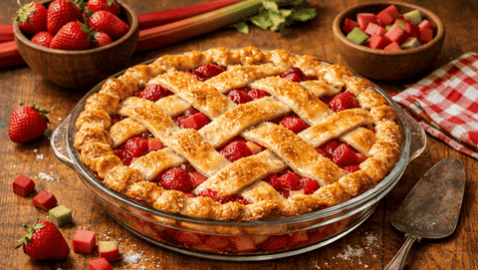
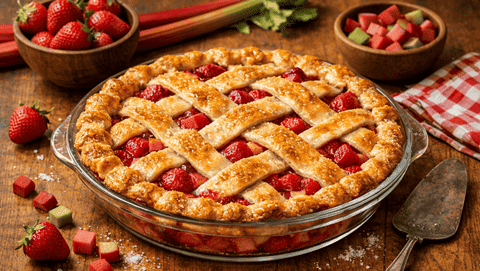
The perfect strawberry rhubarb pie is all about balancing two opposite textures and flavors. Rhubarb brings sharp, vegetal acidity; strawberries bring soft sweetness and aroma. When combined, they create a filling that is bright, juicy, and deeply fragrant. The challenge is managing moisture—both fruits release significant liquid when heated. A successful pie depends on thickener choice, fruit preparation, and proper cooling.
Choosing and Preparing the Fruit

Rhubarb
- Use firm, crisp stalks.
- Avoid leaves—they’re toxic.
- Slice into ½‑inch pieces for even cooking.
- If stalks are very thick, slice lengthwise first.
Strawberries
- Choose ripe but not mushy berries.
- Hull and slice them about ¼–½ inch thick.
- If extremely juicy, pat lightly with a paper towel.
The Fruit Ratio Matters
A 1:1 ratio (3 cups strawberries, 3 cups rhubarb) is classic. More rhubarb = tarter pie. More strawberries = sweeter, softer filling.
The Thickener: Cornstarch vs. Alternatives
Strawberries and rhubarb release a lot of liquid. Cornstarch is the most reliable thickener because it:
- Activates at a lower temperature than flour.
- Produces a glossy, clean-tasting gel.
- Doesn’t dull the fruit flavor.
Use ¼ cup of cornstarch for a juicy, softer set or ⅓ cup for clean slices.
Alternatives:
- Tapioca starch: clearer gel, slightly bouncy texture.
- Flour: more opaque, slightly pasty.
- Clearjel: make specifically for thickening fruit fillings
Creating the Filling
The filling should be mixed gently to avoid crushing the strawberries. Letting it sit 10–15 minutes helps the sugar draw out juices, which then hydrate the cornstarch. This prevents chalky pockets of thickener.
Free Shipping on all orders $49+ at Peets.com
Flavor enhancers:
- Lemon juice brightens the fruit.
- Vanilla softens the tartness.
- A pinch of salt sharpens the overall flavor.
Optional additions:
- Orange zest
- A splash of balsamic vinegar
- A tablespoon of strawberry jam for richness
Mastering the Pie Crust
A flaky crust depends on:
- Cold butter
- Minimal water
- Minimal handling
Mixing
Cut butter into the flour until you have pea-sized pieces. These pockets of fat create steam during baking, forming flaky layers.
Hydration
Add ice water one tablespoon at a time. Stop when the dough holds together when squeezed. Overhydration leads to toughness.
Chilling
Chill at least one hour. This:
- Firms the butter
- Relaxes gluten
- Prevents shrinkage
Rolling and Fitting the Dough
Roll the dough from the center outward, rotating the dough frequently. Aim for a 12‑inch circle for a 9‑inch pie plate.
Transfer gently to the pie plate and avoid stretching the dough, which causes shrinkage.
Trim the edges to leave a 1‑inch overhang.
Decide On Your Top Crust
Lattice
- Allows steam to escape.
- Helps moisture evaporate.
- Creates a beautiful, rustic look.
- See our article on How To Make Lattice Pie Crust.
Full Crust
- Retains more moisture.
- Needs vents cut into the top.
- Produces a slightly softer filling.
Brush with egg wash for shine and sprinkle coarse sugar for crunch.
Assembling the Pie
Add the filling—including juices—directly into the crust. The cornstarch needs that liquid to activate.
If the filling seems extremely wet:
- Add 1–2 extra teaspoons of cornstarch.
- Or drain a few tablespoons of liquid (but not too much).
Baking Temperature Strategy
A two-stage bake is essential. This is common for pies with juicy fillings that would soak into the bottom crust if not flashed baked as quickly as possible.
425°F for 15 minutes
- Sets the crust structure.
- Prevents sogginess.
- Starts caramelization.
375°F for 40–50 minutes
- Allows the filling to bubble.
- Activates the thickener fully.
- Deepens crust color.
Seeing the filling bubble is critical—if it doesn’t bubble, the filling won’t set.
Cooling: The Final Step
Cool the pie for at least 3 hours. I think we’ve all been guilty of breaking this rule. The pie thickens as it cools, and in order to cool it must sit at room temperature. I bake a ton of apple pies through the year. I couldn’t tell you how many times I’ve cut into a perfect pie way too early because the grandkids (or I) were anxious to start devouring it. If the pie isn’t fully cooled, as soon as you cut into it, the juices will escape and fill the pie plate.
During cooling:
- The starch gel firms.
- Juices redistribute.
- Slices become clean and stable.
Cutting early leads to runny filling.
Texture and Flavor Expectations
A perfect strawberry rhubarb pie has:
- A crisp, flaky bottom crust.
- A golden, glossy top crust.
- A filling that is soft but not soupy.
- A sweet-tart balance that leans bright and fruity.
The strawberries should break down into a jam-like base, while the rhubarb retains slight structure.
12. Troubleshooting Guide
Runny Filling
- Not baked long enough.
- Thickener under-measured.
- Fruit extra watery.
- Didn’t cool long enough
Fix next time:
- Increase cornstarch.
- Bake until aggressively bubbling.
- Allow to cool longer
Soggy Bottom Crust
- Oven not hot enough initially.
- Filling too wet.
- Pie plate too thick.
Fix for soggy bottom crust:
- Start at 425°F.
- Use glass or metal pie plate.
- Brush bottom crust with egg white to create a moisture barrier.
Tough Crust
- Overworked dough.
- Too much water.
- Warm butter.
Fix:
- Handle minimally.
- Chill thoroughly.
Variations
Strawberry Rhubarb Crumble Pie
Replace top crust with:
- 1 cup flour
- ½ cup brown sugar
- ½ cup cold butter
- ½ tsp cinnamon
Creates a bakery-style crisp topping.
Strawberry Rhubarb Pie with Orange
Add:
- 1 tsp orange zest
- 1 tbsp orange juice
Brightens the filling.
Extra-Tart Version
Increase rhubarb to 4 cups and reduce strawberries to 2 cups.
Sweeter, Softer Version
Reverse the ratio.
14. Make-Ahead and Storage
Make-Ahead
- Dough: 3 days in fridge, 3 months in freezer.
- Filling: Mix just before baking (fruit macerates quickly).
Storage
- Room temperature: 1 day.
- Refrigerated: 3–4 days.
- Reheat slices at 350°F for 10 minutes to crisp crust.
15. Serving Suggestions
- Vanilla ice cream
- Whipped cream
- A drizzle of heavy cream
- Fresh strawberries on the side
The pie is best served slightly warm or fully cooled.
16. Why This Pie Works
Strawberry rhubarb pie succeeds because it balances:
- Acid + Sweetness
- Soft fruit + Structured fruit
- Flaky crust + Juicy filling
The method above ensures:
- Proper thickening
- Even baking
- Clean slices
- Bright, layered flavor
Strawberry Rhubarb Pie Questions Answered
Why Is My Strawberry Rhubarb Pie Runny?
A runny strawberry rhubarb pie usually happens when the filling contains too much liquid or the pie has not cooled long enough before slicing. Rhubarb and strawberries both release a surprising amount of juice while baking. Using the correct amount of thickener, such as cornstarch or tapioca, helps the filling set properly. Letting the pie cool for several hours after baking is just as important because the filling continues thickening as it rests.
Should I Use Fresh or Frozen Fruit?
Fresh strawberries and rhubarb create the best texture and flavor, especially during peak spring and early summer months. Frozen fruit can still make an excellent pie, but it often releases extra moisture while baking. If using frozen fruit, thaw and drain it first to reduce excess liquid and help prevent a soggy filling.
How Do You Keep the Bottom Crust From Getting Soggy?
A soggy bottom crust is one of the most common pie problems. Baking the pie on a lower oven rack helps the bottom crust cook more thoroughly. Some bakers also brush the crust lightly with beaten egg before adding the filling to create a barrier against moisture. Allowing the oven to fully preheat before baking also improves crust texture.
What Does Rhubarb Taste Like in Pie?
Rhubarb has a tart, tangy flavor that balances perfectly with sweet strawberries. On its own, rhubarb can taste extremely sour, but when combined with sugar and ripe strawberries, it creates the classic sweet-tart flavor strawberry rhubarb pie is known for.
Can I Make Strawberry Rhubarb Pie Ahead of Time?
Yes. Strawberry rhubarb pie can be baked a day in advance and stored at room temperature for several hours or refrigerated overnight. Many bakers believe the flavor improves after the filling has had time to fully set. Before serving, the pie can be gently reheated in the oven to crisp the crust again.
Does Strawberry Rhubarb Pie Need Refrigeration?
Because the filling contains fruit and moisture, strawberry rhubarb pie should be refrigerated if it will sit out longer than a few hours. Cover the pie loosely with foil or plastic wrap and refrigerate for up to four days.
What Thickener Works Best for Strawberry Rhubarb Pie?
Cornstarch is one of the most popular thickeners because it creates a smooth, glossy filling. Instant tapioca is another excellent choice and holds up especially well with juicy fruit pies. Flour can also be used, although it may create a slightly cloudier filling.
Why Is Strawberry Rhubarb Pie So Popular?
Strawberry rhubarb pie combines two flavors that perfectly complement each other. Sweet strawberries soften rhubarb’s sharp tartness, creating a balanced filling that tastes fresh, bright, and comforting at the same time. Its popularity also comes from its strong connection to spring and early summer baking traditions.
Can You Freeze Strawberry Rhubarb Pie?
Yes. Strawberry rhubarb pie freezes very well either baked or unbaked. Wrap the pie tightly to protect it from freezer burn. An unbaked frozen pie can usually be baked directly from frozen by adding additional baking time.
Free Shipping on all orders $49+ at Peets.com